Why Phone Prices Are Rising in Pakistan in 2026
If your next phone costs more than the same model did a few months ago, you are not imagining it. Across budget, mid-range and premium segments, smartphone prices in Pakistan have moved up through 2026 — and shoppers are rightly asking why.
The short answer is that there is no single villain. A phone’s price in Pakistan is built in layers: what it costs in dollars, what the rupee is worth when it lands here, what the government charges at the border and at registration, and what its chips cost on the world market. In 2026, several of those layers have pushed in the same direction at once. Here is each one, explained plainly.
1. The dollar sets the floor price
Almost every phone sold in Pakistan is either imported finished or assembled here from imported kits and parts. Either way, its cost starts in US dollars — and that dollar cost is then converted into rupees.
On 2 November 2026, the rupee closed at PKR 276.72 against the US dollar in the interbank market, with open-market buying and selling rates reported around PKR 277.55 and PKR 280.05. The National Bank of Pakistan’s rates for 3 November 2026 were PKR 276.60 for buying and PKR 277.10 for selling. That is roughly stable day to day — this is not a story of a sudden currency crash in November — but the level itself matters: at around PKR 277 to the dollar, a phone valued at $200 already costs about PKR 55,400 before a single rupee of tax is added, and a $500 phone costs about PKR 138,500.
Earlier in the year the pressure was sharper. Industry reporting noted the rupee lost around 4.2% against the dollar between January and March 2026, with prices of several models rising around 6% to 9% in that period. Importers and retailers reprice when their replacement stock costs more, so even a modest currency move shows up on shop shelves within weeks.
The practical point for buyers: when you compare a phone’s international launch price with its Pakistan price, first convert at roughly PKR 277 per dollar. If the gap is far bigger than that conversion, the rest of the gap is almost always tax — which brings us to the second layer.
2. Taxes and duties: the biggest local layer
Pakistan does not charge one phone tax. An imported phone faces a stack of charges: regulatory duty, sales tax, a mobile handset levy, and advance income tax on the CNIC route. The rates in force since 1 July 2026, for FY2026-27, are set by value band — and they climb steeply as the phone gets more expensive.
There is one piece of genuinely good news here, and it is worth stating honestly: regulatory duty was cut by 20% in the FY2026-27 budget. On phones above $500 it fell from PKR 22,000 to PKR 17,600; on $351–500 phones from PKR 15,000 to PKR 12,000; on $201–350 phones from PKR 11,000 to PKR 8,800; on $101–200 phones from PKR 7,500 to PKR 6,000; and on cheaper bands by the same proportion. Additional customs duty was also reduced from 6% to 4%.
But the cut did not make phones cheap, because the rest of the stack is still heavy. Sales tax is 18% up to $500 and jumps to 25% above $500. The handset levy reaches PKR 16,000 on phones above $700, and advance income tax on the CNIC route reaches PKR 11,500 for filers and PKR 23,000 for non-filers at the top band. The final DIRBS figure always depends on the FBR’s assessed value for your exact model, not on the shop’s sticker price — so online calculators can only estimate.
To see how heavy the stack gets, take the Policy Research Institute of Market Economy (PRIME) finding: taxes account for 23.6% of the cost of a $30 handset but 50.26% of a $700 handset — adding about PKR 98,500 to a phone valued at roughly PKR 196,000, taking it to around PKR 294,500. That is why the premium segment feels the pain most: the tax system is deliberately steeper at the top, and the 25% sales-tax jump above $500 is a cliff edge that brands and importers cannot smooth away.
One more warning from the same research: high official taxes widen the gap with smuggled and cloned phones. The PTA blocked roughly 100 million illegal devices in FY2024-25, including about 72 million counterfeit phones and 27 million with cloned IMEI numbers. A suspiciously cheap “new” flagship is often cheap precisely because its tax was never paid — and the buyer inherits the blocking risk.
3. The memory shortage: why even the same phone costs more
The third force has nothing to do with Pakistan at all — and in 2026 it may be the largest one globally. A shortage of memory chips, driven by the build-out of AI data centres, has pushed up the cost of the DRAM (RAM) and NAND flash (storage) inside every phone.
The numbers are stark. Research firm IDC forecasts global smartphone shipments will fall 16.7% in 2026 while the average selling price jumps 27.6% to a record $581. Counterpoint Research estimates that DRAM and NAND together made up about 13% of a typical phone’s bill of materials in early 2025 and are on track to reach roughly 43% by the third quarter of 2026 — with DRAM now the single most expensive component in a premium phone, ahead of the processor itself. Entry-level phones are hit hardest, with component costs up about 70% year on year in the second quarter of 2026, almost entirely because of memory.
This is already showing up in real price revisions. In India, Lava raised prices by up to INR 3,000 across its range from 15 November 2026, citing memory shortages, and Samsung raised Galaxy S26 prices in South Korea in October 2026, about seven months after launch. These are Indian rupee and Korean won figures, not Pakistan prices — but the same memory is inside the phones sold here, and Pakistani importers buy from the same tight global market. Analysts quoted in the same reporting expect elevated memory costs to last into 2027 and possibly 2028, so buyers should not plan around a quick return to old prices.
4. Why local assembly has not saved prices
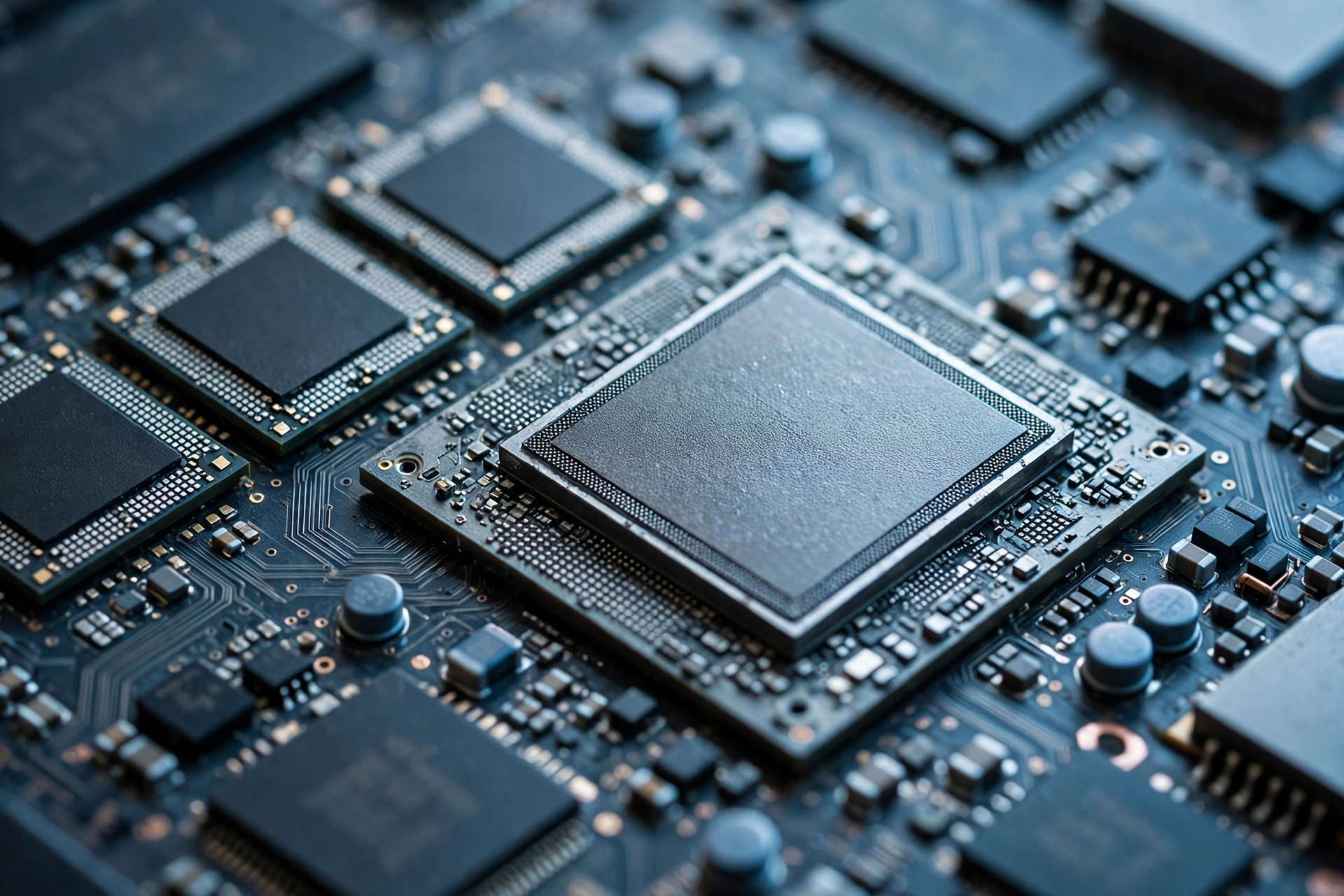
A fair question follows: if Pakistan now assembles most of its own phones, why are prices still tied to imports? The answer is that assembly is not the same as manufacturing.
In the first eight months of 2026, local plants assembled 18.66 million handsets against just 2.74 million commercially imported finished phones — so the overwhelming majority of phones sold here are indeed assembled locally. Yet domestic value addition remains only 10–15%, against a target of 49% set for June 2023. Customs data cited in the PRIME brief put Pakistan’s FY2025-26 mobile import bill at about PKR 520 billion, of which roughly PKR 420 billion was kits for local assembly.
The reason is an inverted tariff structure: components imported as part of completely knocked-down (CKD) kits attract zero customs duty, while the raw materials and inputs needed to make those same components locally face duties of 20–30%. That makes importing finished components cheaper than building them here, so the supply chain stays import-dependent — and every phone still carries dollar-priced parts, freight and tax exposure. Until localisation deepens, “assembled in Pakistan” lowers some costs but does not insulate prices from the dollar or the chip market.
The overall import bill tells the same story: Pakistan’s mobile import bill reached about PKR 530.49 billion in FY2025-26, up roughly 27% from PKR 416.94 billion the year before. More money is leaving the country for phones even as buyers feel squeezed — a sign that higher unit costs, not just higher volumes, are driving the bill.
5. What smart buyers can do right now
You cannot change the dollar rate or the tax slabs, but you can avoid paying more than you need to. Five practical steps help:
1. Always check PTA status before paying. Verify the IMEI through the DIRBS system (SMS 8484 or the DIRBS portal) and buy PTA-approved stock where possible. A non-PTA phone may look thousands cheaper, but the registration tax — plus a 10% late fine on the CNIC route in some cases — usually wipes out the saving, and an unregistered phone risks blocking.
2. Compare the full cost, not the sticker. For a grey-import phone, add the expected PTA tax for its value band before comparing it with a locally available PTA-approved model. The locally available phone often wins once tax is included.
3. Consider last year’s model. With memory costs pushing new launches up, a previous-generation phone with the same RAM and storage — bought as official local stock — is often the best value in late 2026, especially in the mid-range.
4. Do not assume an installment option exists at the counter. An installment route for PTA tax exists on paper through FBR’s CGO No. 06 of 2026, but recent reporting (October 2026) found agencies still disputing who runs it and buyers with no workable option in practice. Confirm in DIRBS at purchase time; never let a shop promise installments it cannot deliver.
5. Buy the RAM you need, not the RAM you dream about. Since memory is the component whose price has exploded, the jump from 8GB to 12GB or from 256GB to 512GB now costs far more than it did a year ago. For most users, 8GB of RAM and 128GB or 256GB of storage remain the sweet spot.
Phone prices in Pakistan are rising because the dollar conversion, the tax stack, the memory shortage and an import-dependent assembly model are all pushing the same way — partly offset, but not cancelled, by the July 2026 duty cuts. Understanding those layers will not make phones cheap, but it will stop you overpaying for the wrong reason. For the latest verified prices, check the individual phone pages on MobZilo before you buy, and re-check the DIRBS figure for any imported handset.