Phone Charging Speeds Explained: 25W vs 45W vs 100W
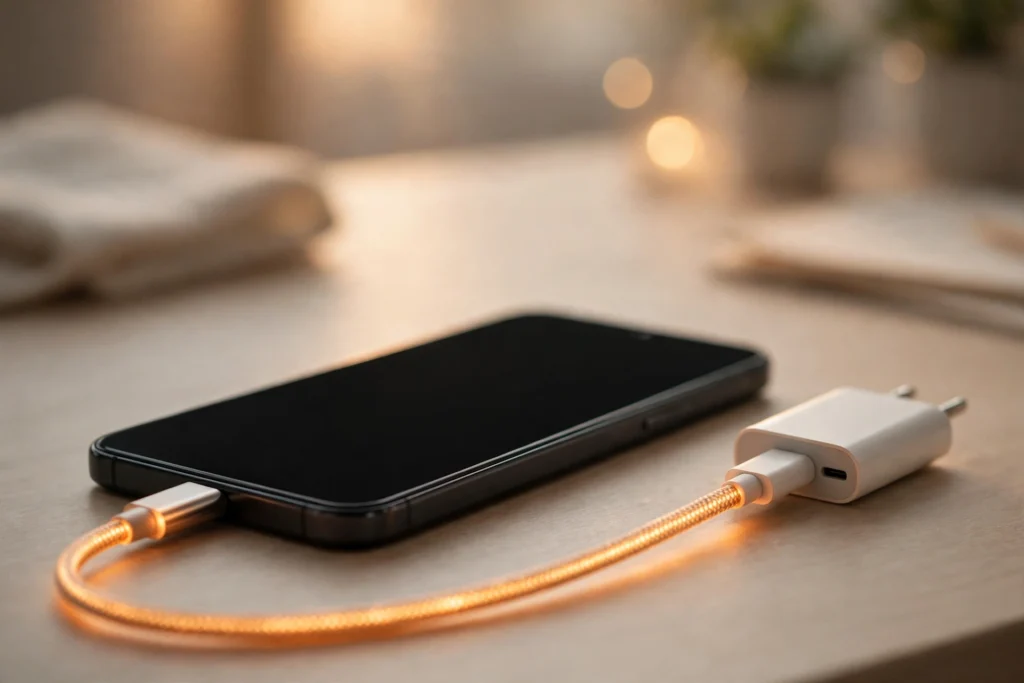
Walk into any mobile shop in Pakistan and you will see the same sales pitch: “100W fast charging!” on a phone that costs half as much as a flagship. It sounds like the 100W phone must charge four times faster than a 25W phone. It does not. A 100W charger is faster, but the real difference is much smaller than the box suggests — and for most people, 45W is the sweet spot.
Charging speed is not one number. It is a negotiation between your phone and your charger, a charging curve that slows down as the battery fills, and a standard — USB PD, PPS, SuperVOOC or HyperCharge — that decides whether your phone gets the full speed at all. This guide explains what watts actually mean, why the last 20% of a charge is always slow, and which phones sold in Pakistan charge fastest, with prices checked on 24 November 2026.
What Watts Actually Mean
A watt is simply volts multiplied by amps: W = V × A. A 25W charger might deliver 5V at 5A, or 9V at about 2.8A. The number tells you the maximum power the charger can deliver — not the power your phone will actually take.
That is the first thing most buyers get wrong. Your phone, not the charger, decides how much power flows. When you plug in, the phone and charger talk first over a protocol such as USB Power Delivery, and the phone asks for the voltage and current it wants. If the charger offers more than the phone can use, the phone simply takes less. Plug an iPhone 17 into a 100W laptop charger and it charges at the same speed as on Apple’s 40W adapter: Apple says the iPhone 17 reaches 50% in about 20 minutes with a 40W adapter or higher, and a 100W charger changes nothing, because the phone draws only about 24W on average in its fast phase (peaking near 40W).
The same rule works in reverse. A phone that supports 100W charging will not charge at 100W from a 25W charger. It takes the smaller of the two numbers: what the charger can give and what the phone will accept. So the charger in the box — or the one you buy separately — matters as much as the number printed on the phone’s spec sheet.
The Charging Curve: Why the Last 20% Is Always Slow
The second thing the box never tells you: a phone never charges at its headline wattage from 0% to 100%. Charging happens in three stages, and the speed falls at each one. This is deliberate — it protects the battery.
Stage 1, 0–50%: the bulk sprint. When the battery is low, it can absorb high power safely, so the phone pulls its maximum wattage. This is where every “0 to 50% in 15 minutes” marketing claim comes from.
Stage 2, 50–80%: the taper. The phone starts cutting power as the battery fills, to keep heat and voltage under control.
Stage 3, 80–100%: the trickle. The charger drops to a low, steady flow. The last 20% can take almost as long as the first 80% combined, on any charger, at any wattage.
A third-party lab test that normalised six phones to a 5,000mAh battery shows the pattern clearly:
| Charging standard | 0–50% | 0–80% | 0–100% |
|---|---|---|---|
| USB PD PPS 25W | 31 min | 57 min | 82 min |
| USB PD PPS 45W | 20 min | 38 min | 58 min |
| SuperVOOC 67W | 16 min | 32 min | 48 min |
Notice what the numbers say. Going from 25W to 45W saves 24 minutes on a full charge — a real difference. But the same lab found that the difference between 120W and 240W to a full charge was only 10 minutes (29 vs 19 minutes in its table).Above 100W, almost all the gain is in the 0–50% sprint; the final stretch is thermally limited on every protocol. If you top up for ten minutes before leaving the house, ultra-high wattage wins. If you charge overnight, it barely matters at all.
USB PD, PPS, SuperVOOC and HyperCharge: Which Charger Works With Your Phone
Wattage is only half the story. The other half is the language the charger and phone speak. If they do not speak the same language, they fall back to a slow, safe speed — usually 5W or 10W, or a basic 18W.
USB Power Delivery (USB PD) with PPS is the open standard used by Apple, Google and Samsung. PPS — Programmable Power Supply — lets the charger adjust its voltage in tiny 20mV steps in real time, so the phone can hold the battery in its most efficient zone with less heat. A Samsung Galaxy phone on a PPS charger gets its full 25W or 45W Super Fast Charging; on a plain USB PD charger without PPS, it charges noticeably slower. If you buy one charger for several phones, a PPS charger is the safest choice.
SuperVOOC (OPPO, OnePlus, Realme) and HyperCharge (Xiaomi, Redmi) are proprietary systems. They use dual-cell batteries and charge-pump chips to push very high current while keeping the heat in the brick, not the phone. That is how they reach 80W, 100W and beyond. The catch: to get the advertised speed you must use the brand’s own charger and cable. Plug a OnePlus phone into a generic USB PD charger and it will likely drop to around 18W or 27W. Xiaomi’s 17T Pro is a partial exception — it supports the 100W PPS standard as well, so a PPS-compatible charger can reach its full 100W.
The cable matters too. Most standard USB-C cables are rated for 3A, which caps them at 60W even at 20V. Above 60W you need a 5A-rated cable, and for the fastest proprietary speeds you need the cable that came in the box. A cheap bazaar cable can quietly halve your charging speed even with the right charger.
Two more things worth knowing before you buy a charger. GaN (gallium nitride) chargers are the modern standard: they run cooler and more efficiently than old silicon bricks, so a 65W GaN charger is about the size of an 18W charger from a few years ago. And wireless charging is always slower than wired — standard Qi runs at 5–15W and loses 20–30% of its energy as heat, so it is a bedside convenience, not a fast top-up.
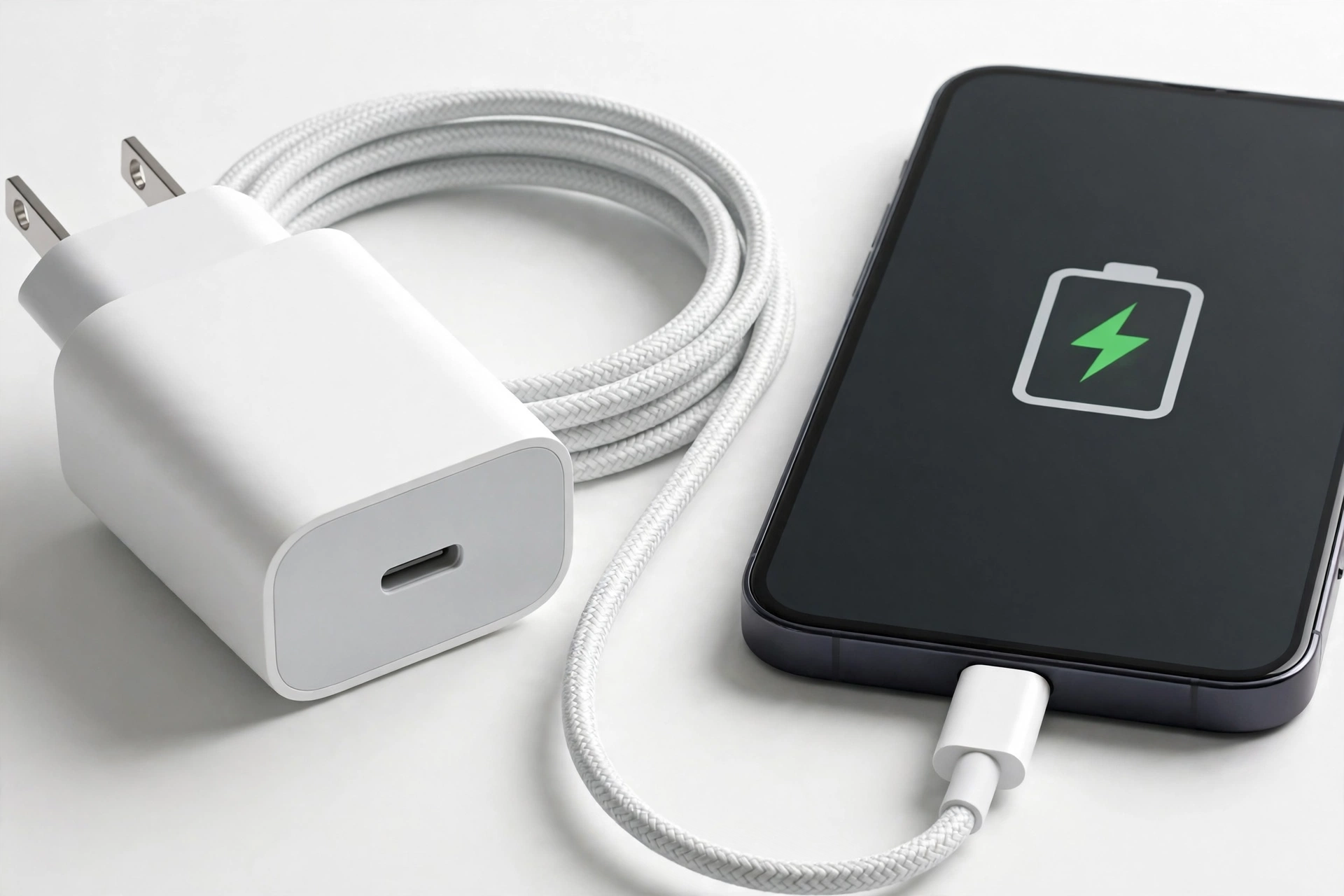
Does Fast Charging Damage Your Battery?
This is the question every buyer asks, and the honest answer is reassuring: not in any way that matters for typical use. Fast charging causes only marginally more battery wear than slow charging, because modern phones actively manage the process. The real driver of long-term battery degradation is not speed — it is heat, along with how long the battery spends sitting at very high or very low charge levels.
Heat is the link between fast charging and wear. More power means more heat, unless the phone manages it well — and today’s phones do, with temperature sensors that slow charging automatically when the cell gets warm, split batteries that spread the heat, and bypass charging, which powers the phone directly from the charger while gaming so the battery is not charged and discharged at the same time. The vivo V80 offers bypass charging.
What actually wears a battery down, in order of importance, is heat, time spent sitting at 100%, and regular deep discharges to 0%. That is why the habits in our battery health tips guide matter more than the wattage on your charger: keep the phone between roughly 20% and 80% when you can, do not leave it charging on a hot dashboard or under a pillow, and let the phone’s own optimised-charging setting handle overnight charging. A phone that fast-charges for 20 minutes during the day and trickle-charges slowly overnight will age much like one that always charges slowly.
Fast Charging in Pakistan: Phones, Prices and What to Buy
Pakistan’s market in late 2026 is a good place to see the whole range, from 25W budget phones to 100W flagships. Prices below are as reported on 24 November 2026; always confirm the current price before buying.
| Phone | Battery | Charging | Price in Pakistan | Charger in box |
|---|---|---|---|---|
| Samsung Galaxy A07 | 5,000mAh | 25W | From PKR 35,399 (market); official PKR 47,999 | No |
| Redmi 15 | 7,000mAh | 33W | PKR 54,995 (8/128); official PKR 58,999 | Varies by market — check the box |
| Infinix Hot 60 Pro | 5,160mAh | 45W | PKR 70,999 (official store; catalogue PKR 72,499 as of 23 Nov 2026) | Yes, 45W |
| Tecno Pova Curve 2 5G | 8,000mAh | 45W | PKR 99,999 | Yes, 45W |
| Tecno Camon 50 Ultra 5G | 6,500mAh | 45W | PKR 119,999 | Yes, 45W |
| Infinix Note 60 Pro | 6,500mAh | 45W | PKR 130,999 official; market ~PKR 122,499 | Yes, 45W |
| Vivo V80 | 7,200mAh | 90W | PKR 209,999 | Yes, 90W — 50% in 30 min (vivo claim) |
| Xiaomi 17T Pro | 7,000mAh | 100W | PKR 289,999 official; market ~PKR 268,995 | Check with seller — varies by market |
| Samsung Galaxy S26 Ultra | 5,000mAh | 60W | From PKR 449,999 | No |
| iPhone 17 Pro Max | — | ~40W | PKR 565,000 official | No |
Three patterns stand out. First, 45W is where the value is: the Hot 60 Pro, Pova Curve 2 5G, Camon 50 Ultra 5G and Note 60 Pro all charge at 45W, all include the charger, and all cost under PKR 135,000. Second, the fastest charging in Pakistan is not on the most expensive phone — the PKR 209,999 vivo V80’s 90W FlashCharge and the PKR 289,999 Xiaomi 17T Pro’s 100W HyperCharge beat the PKR 565,000 iPhone 17 Pro Max’s roughly 40W on paper, though the iPhone’s smaller battery and efficient chip mean the real-world gap is smaller than the numbers suggest. Third, Samsung and Apple no longer include a charger at all, so a Galaxy S26 Ultra buyer who wants the full 60W needs to budget for a separate 45W-or-higher PPS charger, while a Xiaomi 17T Pro buyer should confirm with the seller whether the adapter is in the box, because Xiaomi’s own Pakistan page says it varies by market.
Charging speed also matters more in Pakistan than in most countries, because power is not always there when you want it. With load-shedding still a fact of life in many areas, a phone that can take a meaningful top-up in the 15 minutes between outages is genuinely useful — and that is where 45W and above earn their keep. A big battery helps too: the Pova Curve 2 5G’s 8,000mAh cell and the Redmi 15’s 7,000mAh cell mean fewer charges in the first place, so even their slower 33W and 45W speeds are less of a problem. If your phone is not charging properly, by the way, the fault is usually the cable or the port, not the wattage — check those before buying a new charger.
So what should you buy? If you charge overnight, almost any modern phone is fast enough, and you should choose on battery size and price instead. If you top up during the day, aim for 45W with a PPS charger — it is the point where extra money stops buying much extra speed. Pay for 90W or 100W only if you genuinely live on ten-minute top-ups, and when you do, buy the brand’s own charger or a certified PPS charger, and the right cable, or you will never see the number on the box. For more guides like this, see MobZilo.
FAQ
Is it safe to use a 100W charger on a 25W phone?
Yes. The phone and charger negotiate over USB Power Delivery, and the phone takes only the power it can use — 25W in this case. A reputable USB-C PD charger cannot force extra power into a phone. The risk is not the wattage but a cheap, uncertified charger, so buy a known brand.
Does fast charging damage the battery?
Not meaningfully. Research and long-term testing show fast charging adds only marginal extra wear, because phones slow down automatically when the battery gets warm. Heat, time spent at 100% and regular deep discharges to 0% are the real causes of battery ageing — not the wattage on the box.
Why does my phone charge slowly after 80%?
By design. Charging has three stages: a fast bulk phase up to about 50%, a taper to 80%, and a slow trickle to 100%. The last 20% protects the battery by charging gently, so it takes disproportionately long on every charger, at every wattage.
Do I need the original charger for 100W charging?
For proprietary systems such as SuperVOOC, yes — you need the brand’s own charger and cable to reach the advertised speed. For USB PD and PPS phones such as Samsung, Google and Apple models, any certified PPS charger of the right wattage works. The Xiaomi 17T Pro supports 100W over PPS as well, so a PPS charger can reach its full speed.
Is wireless charging slower than wired charging?
Yes. Standard wireless charging runs at 5–15W, against 25–100W wired, and it loses 20–30% of its energy as heat. It is convenient on a bedside table, but it is not a fast top-up — use a cable when you are in a hurry.